



How to Choose Travertine Tiles for Your Project
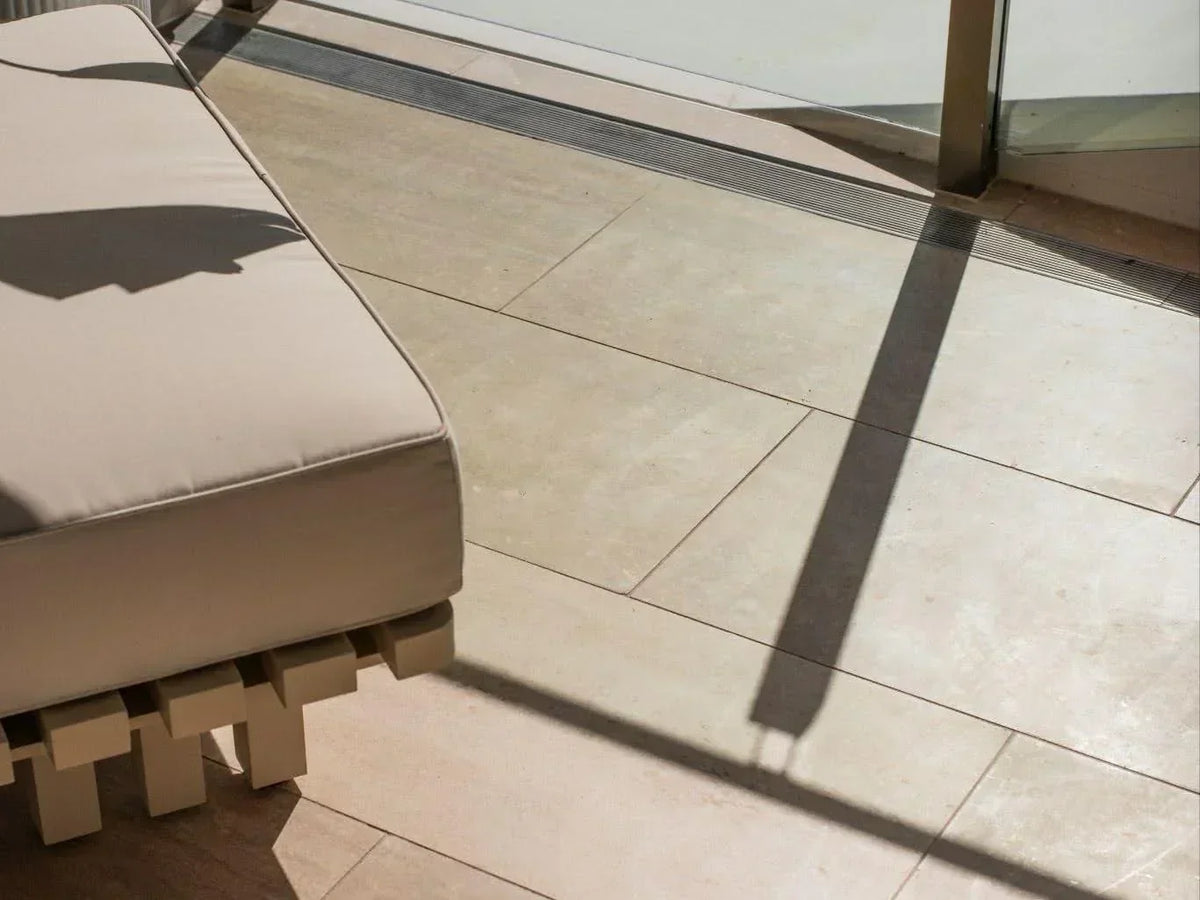
 Travertine's soft, sun-warmed tone is why it turns up in resorts and restaurants as often as it does living rooms.
Travertine is a natural limestone formed around mineral hot springs, and it carries the marks of that origin in every slab: small surface pitting, soft veining, and a colour range that sits somewhere between honey, ivory and warm grey. It's been a building material of choice since the Colosseum, and it hasn't dated in two thousand years, which says something about how well it works.
For a renovation or a new build, the decision usually comes down to three things: the cut, the finish, and where the tile is actually going. Cross cut or vein cut. Honed or brushed. Living room floor or pool edge. Get those three right and travertine will handle decades of foot traffic without looking tired.
This guide walks through each of those decisions, lays out the current Casa Della Casa travertine range with pricing, and answers the questions we hear most often from people renovating in Australian conditions: whether it holds up outdoors, whether it needs sealing, and what it costs per square metre.
Cross Cut vs Vein Cut Travertine
Travertine forms in horizontal layers, and the direction the quarry cuts through those layers changes the pattern on the tile face.
Cross cut travertine is sliced parallel to the natural bedding planes. It shows the classic clouded, almost circular veining that most people picture when they think of travertine floor tiles. It reads as calm and even from a distance, which is why it's the more common choice for large open floors, where a busy pattern would fight with the room.
Vein cut travertine is sliced perpendicular to the bedding, so the same mineral layers appear as long, linear streaks instead of clouds. It's a more dramatic, directional look, and it's the one architects reach for on feature walls, splashbacks and anywhere the tile itself is meant to be the visual moment rather than a quiet backdrop.
Neither is objectively better. It's a styling decision: cross cut for a soft, uniform floor; vein cut for a wall or surface you want people to notice.
Finish Types, Compared
The finish affects how the stone looks, how it feels underfoot, and how safely it performs when wet, which matters more in Australia than in most other markets, given how much of our living happens outdoors.
| Finish | Look & feel | Best used for |
|---|---|---|
| Honed & unfilled | Smooth matte surface with the natural pitting left open | Feature walls and low-traffic indoor floors |
| Honed & filled | Smooth and flush, pores filled for an even surface | High-traffic indoor floors, kitchens, walls, hallways |
| Sandblasted & brushed | Textured, tactile, a worn-in look with real grip | Pool surrounds, alfresco areas, outdoor steps, can also be used internally |
Where Travertine Actually Works Best
Indoors, a filled and honed finish is the safer, lower-maintenance choice for floors, since the flush surface doesn't trap grit in open pores the way an unfilled finish can.
For a feature wall or a kitchen splashback, an unfilled or vein cut tile earns its keep purely on visual interest, since it isn't underfoot and doesn't need to deal with foot traffic.
Outdoors is where finish choice matters most. A sandblasted and brushed or tumbled surface gives you the slip resistance a smooth honed tile can't, which is exactly why Casa Della Casa's outdoor and pool-surround ranges lean on those textures rather than a polished face.
If the project is a pool edge or a courtyard specifically, it's worth reading our separate guide to crazy paving versus traditional pavers, since travertine crazy pave is one of the most requested options for exactly that application.
The Casa Della Casa Travertine Range
Current stock and made-to-order travertine, with indicative pricing per square metre.
| Product | Price | Format | Finish |
|---|---|---|---|
| Travertine Classic Cross Cut, Honed & Unfilled | $95.00/m² | 610 x 406 x 12mm | Honed & unfilled |
| Classic Travertine, Sandblasted & Brushed Subway | Special order | 50 x 200mm | Sandblasted & brushed |
| Travertine Vein Cut, Filled & Honed | From $126.50/m² | 610 x 406 x 12mm | Filled & honed |
| Turkish Vein Cut Travertine, Porcelain Backed | $165.00/m² | 305 x 610 x 10mm | Honed |
 Vein cut travertine, filled and honed: the long linear streaking that suits a feature wall or splashback.
Why the Quality Difference Shows Up Later, Not on Day One
Every travertine tile looks good in the showroom. The difference between a premium slab and a budget import shows up to five years in, once the honed surface has had thousands of footsteps across it.
Casa Della Casa sources travertine in dense, low-porosity blocks and holds batches to a consistent colour and vein run, so a floor laid from three different boxes doesn't read as three different floors. Every range carries a 7-year commercial warranty, which is a longer commitment than most residential suppliers offer, and it's backed by samples from $15 delivered so you can check colour and finish against your own lighting before committing to a full order. For larger volumes, a custom freight quote keeps delivery costs sensible rather than tacking on a flat regardless of order size.
 Cross cut travertine, honed and unfilled: the clouded, even pattern that suits a large open floor.
Installation and Care, in Brief
-
Seal unfilled or textured finishes before grouting, and reseal periodically if the tile is outdoors or in a wet area.
-
Match the finish to the location: honed and filled indoors, sandblasted or tumbled anywhere with foot traffic near water.
-
Stick to pH-neutral stone cleaners. Acidic or abrasive products will etch the surface over time.
-
Leave adequate movement joints on large outdoor runs, particularly in full-sun applications.
Travertine Tiles: Common Questions
Is travertine suitable for outdoor use in Australia?
Yes, provided you choose a textured finish. Sandblasted and brushed or tumbled travertine gives the slip resistance outdoor areas need, particularly around pools and entries. A polished or smooth honed finish is not recommended outdoors.
Does travertine need sealing?
Most travertine benefits from sealing, especially unfilled or textured finishes where the open pores can otherwise collect dirt and moisture. A quality penetrating sealer, reapplied every couple of years in high-traffic or outdoor areas, is standard practice.
How much does travertine flooring cost per square metre?
Across the current Casa Della Casa range, travertine sits between roughly $95 and $165 per square metre depending on cut, finish and format, with some pattern pieces available as a special order.
Cross cut or vein cut: which is better for a splashback?
Vein cut is the more common choice for splashbacks and feature walls, since its linear streaking creates more visual interest at close range than the softer, clouded pattern of cross cut stone.
Ready to Choose Your Tiles?
Travertine rewards a bit of upfront planning: the right cut for the look you want, the right finish for where it's going. If you're still deciding, order a few samples and see how the colour sits in your own light before committing to the full order.
Shop the range: Travertine Tiles collection
Read more
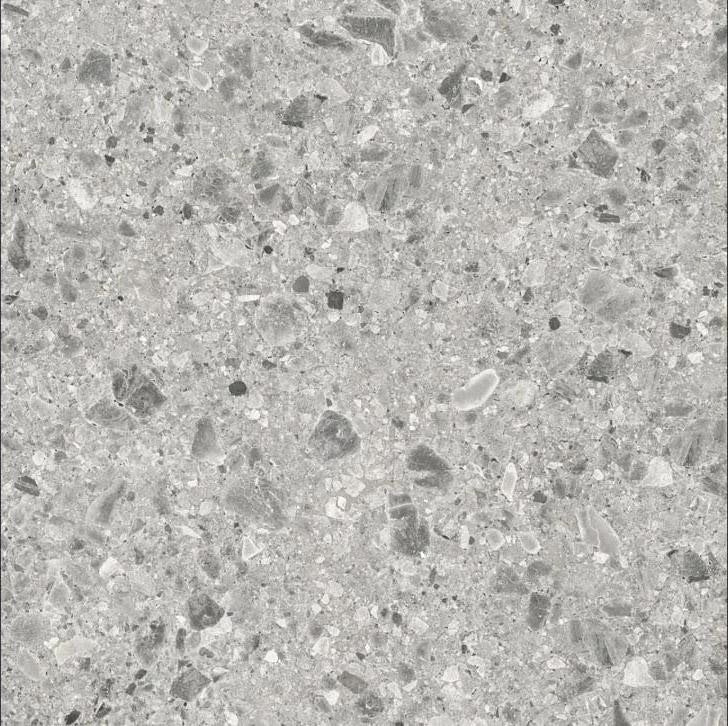
Ceppo Di Gres, made in Italy: the fragmented aggregate pattern that defines terrazzo. Terrazzo Crema Matt, : the fragmented aggregate pattern that defines terrazzo. Terrazzo is a composite surfac...
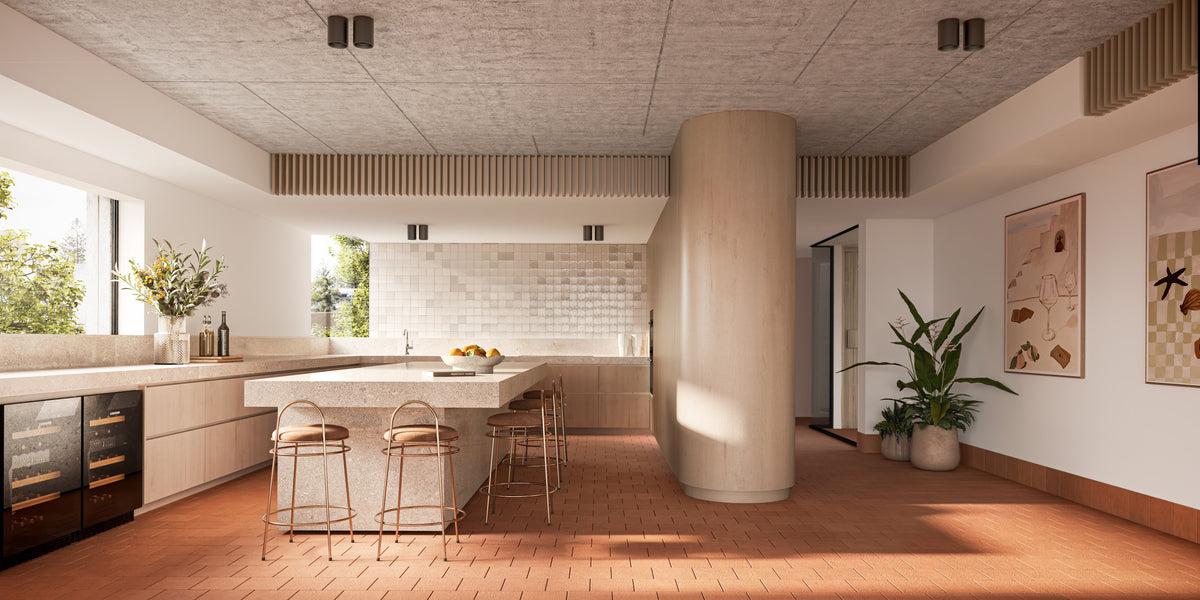
From Tuscany to Miami - and why this centuries-old material is having a moment again There’s something about terracotta that never really dates. Not in the way trends come and go. Not in the way fi...
Leave a comment